


What if you arrived in a brand-new city with no building, no congregation, and no money — but carried a God-given dream so vivid you were willing to bet everything on it?
That’s exactly what Rick and Kay Warren did on a cold January morning in 1980, when they drove into California’s Saddleback Valley with little more than faith and a vision. What started in a living room has since grown into one of the most recognised and discussed churches in modern Christian history.
Saddleback Church has baptised over 50,000 people, sent members to serve in nearly every nation on earth, produced one of the bestselling books in publishing history, and reshaped how countless churches around the world think about ministry. It has also faced real controversy — the kind that raises honest, important questions about church governance, denomination, and what faithfulness to Scripture actually looks like.
Whether you’re a curious believer, a church leader, or someone who’s simply heard the name and wants to understand its significance, this article walks you through the full story — the founding, the philosophy, the global impact, and the challenges that have defined Saddleback Church.
What Is Saddleback Church?
Identity, Size, and Location
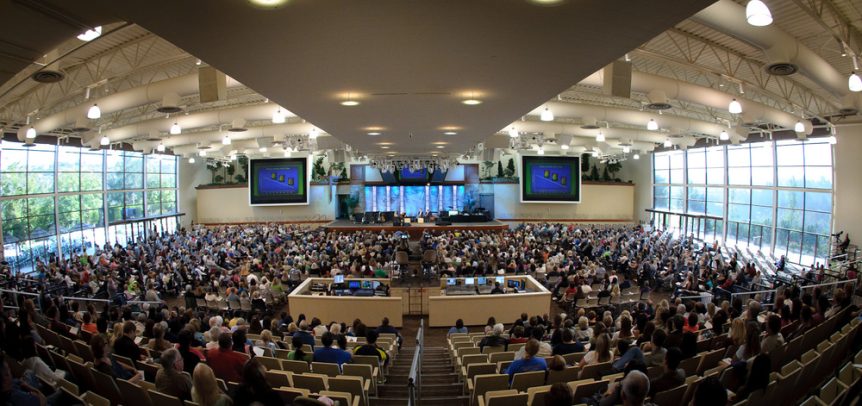
Saddleback Church is an evangelical, non-denominational, multi-site megachurch based in Lake Forest, California, in Orange County. It is the largest church in California and one of the largest in the United States, with a weekly attendance of around 30,000 people across its campuses. Since its founding in 1980, the church has expanded to 19 campuses — including locations across Southern California and internationally.
For most of its history, Saddleback was affiliated with the Southern Baptist Convention (SBC), making it the denomination’s second-largest member church. Since 2023, however, it now identifies as non-denominational following its removal from the SBC — more on that later.
The church’s primary campus sits in Lake Forest, south of Los Angeles. From that base, it has extended its reach across communities, nations, and cultures in ways few churches ever have.
What Denomination Is Saddleback Church?
Saddleback Church was historically a Southern Baptist church. Its founders — Rick Warren, himself a fourth-generation Southern Baptist pastor — built the church within that denominational tradition for over four decades. However, following a landmark decision in 2023, the SBC formally removed Saddleback from fellowship over the issue of women pastors. The church now lists itself as non-denominational on its official website and continues its ministry under that identity.
Mission, Values, and Current Leadership
Saddleback’s founding mission was refreshingly simple: to plant a church for people who didn’t like church. Rick Warren’s vision was to reach the unchurched — people who felt judged, bored, or disconnected from traditional religious settings — and create a community where they could encounter the real Jesus.
The church’s ministry is shaped around five biblical purposes drawn from the Great Commandment (Matthew 22:37–39) and the Great Commission (Matthew 28:19–20): worship, fellowship, discipleship, ministry, and evangelism. These five purposes aren’t just theological bullet points — they’re the structural DNA of how Saddleback organises its programmes, campuses, and outreach.
Since September 2022, the church has been led by Pastor Andy Wood, who succeeded Rick Warren after Warren’s 42-year tenure as founding senior pastor. Andy’s wife, Stacie Wood, serves as a teaching pastor at the church.
The Founding of Saddleback Church — From a Living Room to a Megachurch
How the Church Started in 1980
The story of Saddleback Church begins not with a stage or a building, but with a map and a conviction.
In 1979, Rick Warren — fresh from seminary, having turned down a comfortable offer to lead a 5,000-member church in Texas — arrived in California’s Saddleback Valley with his wife Kay. They had no money, no land, no members, and no building. What they had was a God-given dream and a plan. Warren had spent months studying demographics and had identified Saddleback Valley as one of the fastest-growing communities in America — a place full of people who had no church home.
Before the first public service, the Warrens hosted small Bible study sessions in their home, beginning with just six people. From that handful of faithful attendees, the vision began to take shape. It was the kind of beginning that required more faith than strategy — which, as it turns out, is exactly how God tends to build things.
Easter Sunday and the First Public Service
On April 6, 1980 — Easter Sunday — Saddleback Church held its first public worship service. The venue was the Laguna Hills High School Theatre. The crowd that showed up numbered around 200 people, many of whom had never set foot in a church before. Warren preached his very first sermon as senior pastor that day, laying out the vision God had given him.
The week after? About half didn’t return.
That moment of discouragement would have broken many young pastors. But Rick and Kay pressed on, trusting that the vision was bigger than the setbacks. It’s a reminder that every significant kingdom work tends to begin in obscurity, not abundance.
Early Struggles and Growth Into a Megachurch
The early years were marked by genuine hardship. The church moved between rented spaces — school buildings, theatres, community halls — for years before it had a permanent home. There were financial pressures and moments of deep uncertainty. Growth came slowly at first, then suddenly.
Within a decade, attendance had climbed dramatically. The church developed what became known as the “baseball diamond” model of discipleship — a deliberate pathway designed to move people from first-time visitors into deeper levels of spiritual commitment and community involvement. It was an organisational philosophy as much as a spiritual one, and it worked.
By the time Saddleback celebrated its first decade, it had become one of the fastest-growing churches in American history. The growth wasn’t just numerical — it sparked an entire movement that would influence how churches around the world approached ministry.
Saddleback Church’s Core Beliefs and the Purpose Driven Philosophy
What Does Saddleback Church Believe?
Saddleback Church holds to evangelical Christian doctrine. It affirms the Bible as the inspired, authoritative Word of God. It teaches salvation through faith in Jesus Christ alone, the importance of baptism, the reality of the resurrection, and the call to live a life of discipleship and mission.
Its theological roots are broadly evangelical — accessible to believers across many traditions, while remaining grounded in Scripture. The church’s teaching style has always prioritised clarity and relevance, aiming to connect biblical truth to the everyday realities people face at work, in relationships, in health, and in family life. That kind of faith-driven living is at the heart of everything Saddleback teaches.
What Is the Purpose Driven Philosophy?
The Purpose Driven philosophy is the theological and organisational framework at the core of everything Saddleback does. It asks — and answers — one foundational question: Why does the church exist?
Rick Warren’s answer was rooted in the two greatest commandments Jesus gave. The church exists to love God (through worship), love people (through fellowship), grow in Christlikeness (through discipleship), serve others (through ministry), and reach the world (through evangelism). These five purposes aren’t a programme — they’re a framework for building a healthy, balanced, outward-focused church.
Warren first articulated this model in his 1995 book The Purpose Driven Church, which became a standard text for pastors around the world. The philosophy reshaped how an entire generation of church leaders thought about growth, structure, and mission. Rather than asking “How do we get more people in the building?”, Purpose Driven leaders were taught to ask “Are we fulfilling all five purposes of the church?”
Think about it — a church can be large and still be spiritually malnourished. And a small church can be vibrantly purpose-driven and deeply effective in its community. The framework was never just about size. It was about health.
Worship Style, Small Groups, and Family Ministry
Saddleback pioneered the contemporary worship model at a time when most evangelical churches were still using traditional hymns and formal service structures. Warren understood early on that style is not the same as substance — and that reaching unchurched people sometimes required lowering the cultural barriers to entry without lowering the theological bar.
Services are warm, accessible, and music-centred. The church incorporates modern worship music into every gathering — a style now reflected across contemporary Christian worship culture globally.
Small groups are the relational backbone of the Saddleback community. The church has always believed that genuine discipleship happens in intimate settings, not just large auditoriums. Thousands of small groups — organised around neighbourhoods, life stages, and shared interests — have helped Saddleback maintain community depth despite its enormous scale.
Youth ministry, marriage support, family resources, and counselling programmes round out a ministry ecosystem designed to serve people at every stage of life.
The Purpose Driven Life — A Book That Changed the World
Publication, Message, and Worldwide Sales
In 2002, Rick Warren published The Purpose Driven Life: What on Earth Am I Here For? — and the Christian publishing world was never quite the same.
The book is structured as a 40-day devotional journey, built around a single, piercing opening line: “It’s not about you.” In a culture saturated with self-help language, that reframe was radical. Warren argued that human beings cannot discover their purpose by looking inward — they can only find it by understanding what God says about why they were created.
The book went on to become one of the bestselling nonfiction hardbacks in publishing history. Publishers Weekly confirmed it as the top-selling nonfiction hardback ever recorded. Sales figures have ranged from over 32 million to more than 50 million copies, depending on the source and timeframe — and it has been translated into more than 85 languages, making it one of the most widely distributed Christian books after the Bible itself.
To put that in perspective: there are countries where a copy of The Purpose Driven Life is easier to find than clean water. That’s the scale of its reach.
Impact on Churches and Individual Believers
The book didn’t just sell — it sparked a movement. Churches around the world ran “40 Days of Purpose” campaigns, which reportedly produced an average of 28% growth in attendance and over 100% growth in small group participation. Prisons ran it as a programme. Hospitals adopted it. Community groups studied it together.
For millions of everyday believers, The Purpose Driven Life was the first book that made theology feel personal. It connected ancient biblical truth to modern questions of identity, meaning, and calling. The influence of Christian thinkers like Rick Warren on 21st-century faith is hard to overstate.
When the book’s success brought in massive royalties, Rick and Kay Warren made a remarkable choice: they began reverse tithing — giving away 90% of their income and living on 10%. Warren stopped drawing his church salary entirely and quietly repaid every dollar Saddleback had ever paid him. That decision spoke louder than any sermon.
Praise, Criticism, and Cultural Reach
Not everyone received The Purpose Driven Life without reservation. Critics from more Reformed theological traditions raised concerns about Warren’s use of multiple Bible translations, the book’s accessibility-first approach, and what they saw as an overly optimistic view of human potential.
These are fair conversations to have. No book — outside the Bible — is beyond critique. But even critics have generally acknowledged that the book reached millions of people who would never have picked up a traditional theological text, and introduced them to a living, purposeful God.
The book’s cultural reach extended beyond church walls. The Purpose Driven Life has been read in prisons, recovery programmes, corporate boardrooms, and by heads of state. It remains one of the most-read books of the 21st century across any genre.
Saddleback Church’s Global Impact and Missions
The PEACE Plan — Taking the Gospel to the World
If The Purpose Driven Life was the literary expression of Saddleback’s mission, the PEACE Plan was its operational one.
Launched by Rick and Kay Warren after a transformative trip to Rwanda, the PEACE Plan is Saddleback’s global strategy for missions. The acronym stands for: Plant churches, Equip leaders, Assist the poor, Care for the sick, and Educate the next generation. The driving idea is that ordinary people — empowered by God and mobilised through local churches — can address the world’s most pressing problems.
Warren identified five “global giants” that PEACE was designed to confront: spiritual emptiness, self-serving leadership, poverty, disease, and illiteracy. These aren’t abstract problems — they’re the lived reality for billions of people across the developing world. And Saddleback believed the local church was the most sustainable and effective vehicle for addressing them.
More than 7,400 Saddleback members have volunteered for overseas PEACE trips, serving communities across Africa, Asia, Latin America, and beyond. The plan has partnered with governments, NGOs, and businesses — not just churches — recognising that complex human needs require collaborative solutions.
International Campuses and Church Planting
Saddleback’s global footprint extends well beyond its Southern California roots. The church has campuses in Hong Kong, Buenos Aires, Berlin, and beyond, as well as extensive church-planting partnerships across Asia, Africa, and Europe.
In Africa alone, Saddleback’s partnership with Rwanda became a flagship example of what whole-community transformation through the local church could look like. The church trained Purpose Driven Master Trainers in Rwanda, helped churches in Mexico become purpose-driven in their approach, and sent PEACE teams to Russia, the Philippines, Indonesia, and dozens of other nations.
At its peak reach, Saddleback had sent 26,869 members to serve in 197 nations — and trained more than 200,000 church leaders worldwide in the Purpose Driven model. That level of missionary mobilisation from a single congregation is, by any measure, extraordinary.
Training Church Leaders Globally
One of Saddleback’s most enduring contributions to global Christianity is leadership development. Through the Purpose Driven Network — a global community of churches and pastors committed to the five purposes — Saddleback has equipped hundreds of thousands of ministry leaders across denominational lines.
The church has hosted conferences and training programmes that draw pastors from every continent, helping local leaders build healthier, more missional congregations in their own contexts. Warren’s vision was never to clone Saddleback — it was to release the Purpose Driven philosophy into every cultural context so that local churches could flourish on their own terms. This commitment to developing kingdom leaders is one of the key trends shaping the modern church.
Controversies and Challenges — What Really Happened with the SBC?
Why Did Saddleback Church Leave the SBC?
Saddleback Church didn’t technically leave the Southern Baptist Convention — it was removed.
In 2021, Rick Warren ordained three women as pastors at Saddleback, a decision that immediately drew scrutiny from within the SBC, whose Baptist Faith and Message 2000 reserves the pastoral office for men. In February 2023, the SBC’s Executive Committee voted to disfellowship Saddleback, citing its having “a female teaching pastor functioning in the office of pastor” — referring to Stacie Wood, wife of incoming senior pastor Andy Wood.
Saddleback appealed the decision at the SBC’s annual meeting in New Orleans in June 2023. The appeal failed decisively — an overwhelming 88% of delegates voted to uphold the removal. It was the first time in SBC history that churches had been expelled specifically over the issue of women in pastoral roles.
Rick Warren, in an emotional address to the convention in 2022, had urged his fellow Southern Baptists: “Are we going to keep bickering over secondary issues — or are we going to keep the main thing the main thing?” The response from the convention, though resounding, reflected a genuine theological conviction held by the majority of SBC churches — not simply a political manoeuvre.
Saddleback now operates as a non-denominational church and continues its ministry under that identity.
The Ordination of Women Pastors — The Full Story
The debate over women in pastoral ministry is one of the most genuinely contested issues in contemporary evangelical Christianity. It’s not a new argument — it has deep roots in biblical interpretation, church history, and theological tradition.
The SBC’s position, held since 2000, is that the pastoral office is reserved for men as qualified by Scripture — drawing primarily on passages such as 1 Timothy 2:12 and 1 Timothy 3:1–7. Saddleback, under Warren, came to a different interpretive conclusion — one shared by many evangelical scholars and denominations that affirm women in pastoral roles.
What makes this story worth sitting with is that reasonable, Bible-believing Christians genuinely disagree on this question. It’s not a clash between people who take Scripture seriously and those who don’t. It’s a clash between people who read the same text and arrive at different conclusions about its application. That kind of humility matters when we talk about this issue — on either side.
Megachurch Criticism and Broader Accountability Concerns
Saddleback has not been immune to the broader criticisms that have followed the megachurch movement generally. Critics have raised concerns about the seeker-sensitive model — the idea that making church comfortable for outsiders can, over time, dilute the theological depth of what’s being preached. Others have raised questions about transparency, financial accountability, and the dynamics of celebrity pastor culture.
These are legitimate concerns worth taking seriously — not as attacks on Saddleback specifically, but as important checks on any large ministry. Size can create distance. Popularity can create pressure to entertain rather than convict. Any church leader — in a congregation of 30 or 30,000 — would do well to ask these questions honestly.
Saddleback Church Campuses and Key Ministries
The Main Campus and Satellite Locations
Saddleback’s flagship campus is located in Lake Forest, California, on a 120-acre site that houses its primary worship facilities, administrative offices, and community programmes. From that main campus, the church has expanded to 19 locations — 15 across Southern California plus international campuses in cities including Hong Kong, Buenos Aires, and Berlin.
Each campus maintains the Saddleback brand identity and teaching model while adapting to its local community context. The church also operates a robust online campus that extends its reach to members and visitors who can’t attend in person.
Celebrate Recovery and Community Outreach
One of Saddleback’s most quietly powerful ministries is Celebrate Recovery — a Gospel-based recovery programme founded in 1991 by Saddleback member John Baker, with Warren’s full support. Baker, who had worked through Alcoholics Anonymous personally, wanted to create a Christ-centred alternative for people struggling with addiction, trauma, and destructive habits.
What began as a local programme has since spread to tens of thousands of churches across the United States and around the world. Celebrate Recovery has become one of the most widely adopted church-based recovery ministries in history — a remarkable legacy born out of one man’s testimony and one church’s willingness to make space for the broken.
Saddleback also offers free individual and family counselling through its PEACE centres on campus — a tangible expression of the church’s “second chance grace” theology. The idea that God meets people in their mess, not after they’ve cleaned up, is woven through everything Saddleback does in this space.
Youth, Family, and Counselling Ministries
Saddleback invests deeply in the next generation. Its youth and student ministries are designed to engage junior high, high school, and college-aged young people with faith that’s relevant, relational, and biblically grounded. Children’s ministry provides age-appropriate programming that introduces young ones to God and community from their earliest years.
Marriage and family support, parenting resources, and grief counselling round out a comprehensive pastoral care ecosystem. The goal is not just to attract people on Sunday — it’s to serve them across the full arc of their lives.
Lessons the Church Can Learn from Saddleback
Vision, Bold Faith, and Church Planting
Perhaps the most lasting lesson from Saddleback Church is the power of a clear, God-given vision pursued with unapologetic boldness.
Rick and Kay Warren didn’t start Saddleback with resources. They started it with obedience. The willingness to turn down comfort, step into uncertainty, and plant something from nothing — that’s a posture every church leader and every believer can learn from. Vision without courage stays on paper. Saddleback is proof that courage without resources is still enough when God is in it.
If your church — or your faith — feels stagnant right now, it may be worth asking: Is there a dream I’ve been too cautious to pursue?
Outreach Done at Scale
Saddleback demonstrates that local church outreach doesn’t have to stay local. The PEACE Plan model proved that ordinary members — not just professional missionaries — can serve the world’s most pressing needs when they’re equipped, mobilised, and sent with a clear purpose.
Every congregation, regardless of size, can draw something from that. You don’t need 30,000 members to make a global difference. You need willing people, a clear plan, and a God who keeps His promises.
Warnings for Modern Ministry Leaders
Saddleback’s story also comes with cautions worth heeding. The seeker-sensitive model, at its best, lowers unnecessary cultural barriers to the Gospel. At its worst, it can drift toward entertainment over transformation. The megachurch format, when it functions well, creates community at remarkable scale. When it falters, it can create anonymity, distance, and unchecked leadership.
The question for every growing church isn’t just “How do we reach more people?” It’s “Are we actually making disciples?” Numbers and depth are not always the same thing — and the churches that forget that tend to discover it too late.
Saddleback Church FAQ
Who founded Saddleback Church? Saddleback Church was founded by Rick Warren and his wife Kay Warren in 1980 in Lake Forest, California.
Is Rick Warren still the pastor? No. Rick Warren retired in 2022 after 42 years as senior pastor. He now serves as founding pastor. The current lead pastor is Andy Wood, who took over in September 2022.
How large is Saddleback Church? Saddleback Church has a weekly attendance of approximately 30,000 people across its campuses. It is the largest church in California.
Where is Saddleback Church located? The main campus is in Lake Forest, California, in Orange County, south of Los Angeles. The church also has 14 additional campuses across Southern California and international campuses in cities including Hong Kong, Buenos Aires, and Berlin.
Conclusion: A Legacy Still Being Written
Saddleback Church is not a perfect institution — no church is. But it is an extraordinary one.
From a living room Bible study in 1979 to a global movement spanning nearly 200 nations, the story of Saddleback is ultimately a story about what happens when people take God seriously enough to act on what He’s called them to do — even when the odds are against them.
Its legacy includes 50,000 baptisms, hundreds of thousands of trained leaders, a book that has reached tens of millions of people in their darkest moments, and a recovery programme that has brought healing to communities around the world.
The controversies are real and worth engaging honestly. The criticisms deserve a thoughtful response, not a defensive one. But the fruit is also real — and the church that planted Saddleback Valley in 1980 planted something that bore far more fruit than anyone could have imagined.