
Table of Contents
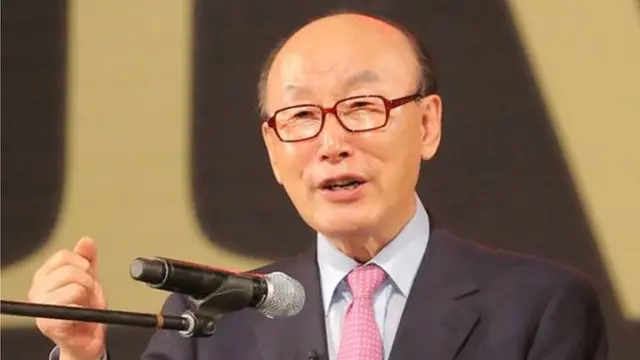
David Yonggi Cho (Korean: 조용기; born 14 February 1936 as Paul Yungi Cho — died 14 September 2021) was a South Korean Pentecostal pastor and evangelist.
He co-founded the Yoido Full Gospel Church in Seoul, South Korea, which grew into the largest Christian congregation in the world.
At its peak, the church served more than 830,000 members across seven Sunday services each week. Cho also founded Church Growth International in 1976 and helped establish the World Assemblies of God Fellowship. He is widely regarded as one of the most influential Christian leaders of the 20th century.
David Yonggi Cho at a Glance
| Personal | |
|---|---|
| Full Name | David Yonggi Cho (born Paul Yungi Cho; Korean: 조용기) |
| Born | 14 February 1936, Ulsan, South Gyeongsang Province, Korea (then part of the Japanese Empire) |
| Died | 14 September 2021 (aged 85), Seoul, South Korea |
| Cause of Death | Brain hemorrhage (cerebral hemorrhage; hospitalized since July 2020) |
| Nationality | South Korean |
| Parents | Cho Doo-chun (father); Kim Bok-sun (mother) |
| Siblings | Four brothers, four sisters (eldest of nine children) |
| Spouse | Kim Sunghae (m. 1965; died 11 February 2021) |
| Children | Three sons: Cho Hee-Jun, Cho Min-Je, Cho Seung-Je |
| Education | Full Gospel Theological Seminary (now Hansei University), Seoul; Kookmin University |
| Ministry | |
|---|---|
| Title | Senior Pastor (1958–2008); Pastor Emeritus (2008–2021) |
| Church | Yoido Full Gospel Church, Seoul, South Korea |
| Denomination | Assemblies of God (Pentecostal) |
| Co-Founded With | Choi Ja-shil (his mother-in-law) |
| Successor | Lee Younghoon (Senior Pastor from 2008) |
| Other Organizations | Church Growth International (founded 1976); World Assemblies of God Fellowship (co-founded) |
| Religion | Christianity — Pentecostal |
| Theology | Fivefold Gospel; Threefold Blessing; cell church model; prayer-centered growth |
| Career | |
|---|---|
| Books (Korean) | 330+ titles |
| Books (English) | 49 titles |
| Books (Other Languages) | 247 translations |
| Notable Books | The Fourth Dimension; Successful Home Cell Groups; The Fivefold Gospel and Threefold Blessing |
| Net Worth | Estimated $10–15 million (unofficial; disputed) |
| Website | davidcho.fgtv.com |
Early Life and Background
David Yonggi Cho was born on 14 February 1936 in Ulsan, in the South Gyeongsang Province of Korea, then under Japanese colonial rule.
His father was Cho Doo-chun and his mother was Kim Bok-sun. He was the first of nine children — five sons and four daughters — in a Buddhist household. He excelled at school and graduated from middle school with honors.
His early years were shaped by poverty and wartime upheaval. Cho lived through the devastation of the Korean War (1950–1953).
During the war, he served as an interpreter between his school principal and an American military commander, a role that gave him early exposure to English and to Western culture.
The Illness That Changed Everything
In his second year of high school, Cho was diagnosed with pulmonary tuberculosis. Doctors told him he had little time to live. At the time, he had no Christian faith — he had been raised Buddhist.
During his illness, a friend of his older sister visited and shared the Christian gospel with him. She gave him a Bible.
As he read it, Cho became convinced that if he accepted Jesus, he would be healed. He prayed, repented, and within a period he later described as miraculous, recovered from his tuberculosis. That experience did not just change his body — it changed the entire direction of his life.
He went on to enroll at the Full Gospel Theological Seminary in Seoul, an Assemblies of God institution that is now called Hansei University. He graduated in 1958.
READ ALSO: Paul Adefarasin Biography: Age, Wife, Children, Family & House on the Rock Ministry
Ministry Career and the Founding of Yoido Full Gospel Church
Straight out of seminary, Cho co-founded a church with his future mother-in-law, Choi Ja-shil, herself a recent seminary graduate.
They did not have a building, a budget, or a congregation. Their first service in May 1958 was held in Choi’s living room.
Those present: the two pastors, Choi’s three children, and one older woman who had wandered in to get out of the rain. Six people total.
From that beginning, the church grew. By 1959, it had 50 members and had outgrown the living room. Services moved to a tent in Choi’s front yard.
The postwar context mattered. South Korea in the late 1950s was a country still rebuilding from devastation. Millions were homeless and jobless.
Cho and Choi offered a message of healing and hope to people who had very little of either. Reports of miraculous healings drew crowds. The church kept growing.
The Move to Yoido
In 1973, the congregation moved to a new sanctuary on Yeouido Island — a stretch of land along the Han River in Seoul that was then largely undeveloped.
The name “Yoido” in Korean means something close to “useless” or “you can have it.” Locals considered the island worthless real estate.
The church built there anyway. That island is now the financial district of Seoul — the South Korean equivalent of Wall Street. The church that nobody thought should be there became the biggest church in the world.
Growth to 800,000 Members
By the time Cho retired from active pastoral leadership in 2008, the Yoido Full Gospel Church held seven Sunday services per week and served a weekly attendance of roughly 800,000 people.
The congregation had hundreds of licensed ministers and thousands of small group (cell group) leaders running weekly gatherings of 10 to 15 people across the city and nation.
The church also sent thousands of missionaries to countries around the world and maintained over 500 locations across South Korea.
Cho personally participated in religious rallies and ministry events in 71 countries.
The Cell Group Model: How Cho Grew the World’s Largest Church
Cho did not build a megachurch by putting everything on the Sunday stage. His method was the opposite. He believed the real engine of church growth was small groups.
He organized his congregation into home cell groups — small gatherings of 10 to 15 people, led by trained laypersons, meeting weekly in homes and apartments across Seoul.
These groups prayed together, studied Scripture together, and cared for each other’s practical needs. The pastoral staff oversaw the cell leaders, who in turn pastored the small groups. This structure let the church grow in depth while it grew in scale.
Cho spent more than 44 years teaching this model. Churches around the world adopted and adapted it. Pastors flew to Seoul from dozens of countries to study what he was doing.
READ ALSO: Todd Coconato Biography: Wife, Child Actor Roles & Ministry
Church Growth International
In November 1976, Cho founded Church Growth International, an organization built specifically to export what he had learned.
The organization trained pastors from around the world in the principles of evangelism, cell group ministry, and church growth.
It ran conferences, published training materials, and hosted international delegations in Seoul. For many pastors in the developing world, a trip to the Yoido church became a pilgrimage of sorts — a chance to see, up close, what was possible.
David Yonggi Cho’s Books
Cho was one of the most prolific Christian authors of the 20th century. Over his lifetime, he wrote more than 330 books in Korean, 49 books in English, and his works were translated into 247 additional languages. His total readership ran into the millions.
His most influential English-language titles include:
- The Fourth Dimension (Vol. 1 and Vol. 2) — his core teaching on prayer, faith, and spiritual visualization
- Successful Home Cell Groups — the practical guide to his cell church model
- The Fivefold Gospel and Threefold Blessing — his systematic theological framework
- Prayer: Key to Revival
- The Holy Spirit, My Senior Partner
- Solving Life’s Problems
His books were standard reading in Pentecostal Bible colleges and ministry training programs across Asia, Africa, and Latin America.
Theology and Beliefs: The Fivefold Gospel
Cho’s theological framework was built around what he called the Fivefold Gospel — a Korean Pentecostal systematization of core Christian doctrine adapted to the postwar Korean context. The five elements are:
- Regeneration — salvation through faith in Jesus Christ
- The fullness of the Holy Spirit — baptism in the Holy Spirit with evidence of spiritual gifts
- Divine healing — the healing of the physical body as part of God’s redemptive work
- Blessing — material and financial provision as a covenant promise
- The Second Coming of Christ — the hope of Christ’s return as the church’s ultimate horizon
Cho paired this with a teaching he called the Threefold Blessing, drawn from 3 John 1:2 — the idea that God’s will for believers encompasses spiritual health, physical health, and material prosperity.
Critics noted that some of Cho’s teaching leaned toward what is commonly called the prosperity gospel. Cho himself pushed back on that label. He argued that suffering is real and part of God’s purposes.
“Fundamentally, God wants us to be healthy, spiritually and physically,” he said. “Sometimes God wants us to change, which often comes with pain.” His position was that God’s ultimate will is good, even when the path through includes suffering.
Cho also taught fourth-dimensional spirituality — a framework for understanding how faith, dreams, and prayer function in the spiritual realm. He drew on this to explain what he saw as the mechanics of answered prayer and church growth.
Prayer as the Engine of Growth
Prayer was not just a teaching for Cho — it was the structure of his daily life and ministry. He emphasized specific, detailed prayer rather than vague petitions.
He taught his congregation to visualize what they were praying for, to believe with precision, and to persist. The Pentecostal prayer tradition ran deep in everything the Yoido church did.
Role in the World Assemblies of God Fellowship
Cho was a central figure in the founding and development of the World Assemblies of God Fellowship, the largest single Pentecostal body in the world.
His global influence helped knit together national Assemblies of God churches from Asia, Africa, and Latin America into a coherent international movement.
For pastors in the Global South, Cho was proof that the largest church in the world did not have to be in the West.
Personal Life
Marriage to Kim Sunghae
In 1965, Cho married Kim Sunghae, the daughter of his co-founder and mentor Choi Ja-shil. The marriage meant his mother-in-law was also his ministry partner — a dynamic that shaped the Yoido church’s early years.
Kim Sunghae was not a quiet presence behind her husband. She was an accomplished pianist, a piano professor, a composer of gospel songs, and a published author.
She served as President of Hansei University, the institution affiliated with the Yoido church. They were married for 56 years.
Kim Sunghae died on 11 February 2021, at the age of 78, from a chronic illness at Seoul National University Hospital. Her husband was already hospitalized at the time. He outlived her by just seven months.
Children
Cho and Kim Sunghae had three sons: Cho Hee-Jun, Cho Min-Je, and Cho Seung-Je. The two younger sons went on to work in church-related ministries.
The eldest, Cho Hee-Jun, became the subject of significant legal and personal controversy (see Controversies section).
READ ALSO: Enitan Adaba Biography: The Nigerian Worship Voice Behind “I Proclaim You”
Social Welfare Work
Cho’s ministry extended well beyond the church walls. In January 1986, he led the founding of Elim Welfare Town, a facility designed to serve the elderly, the young, the homeless, and the unemployed.
Those who came through received vocational training and a choice of four occupations. In 1988, he founded Kukmin Ilbo, a daily newspaper. His church also ran education programs, health clinics, and community development initiatives.
One account reported that Cho personally raised and gave more than $170 million to the church and its social programs over his lifetime — and that despite leading the largest church in the world, he lived in a 1,000-square-foot church apartment and did not own a car.
Controversies and Scandals
Cho’s later years were not free from serious controversy. In September 2011, 29 church elders filed complaints with South Korean prosecutors.
They accused Cho of embezzling approximately 23 billion won ($20 million) from church funds. A national broadcaster, MBC, ran a documentary claiming part of the money had gone toward purchasing properties for Bethesda University in Anaheim, California, a school Cho had founded.
The investigation narrowed to a specific transaction. In 2002, Cho had directed church officials to purchase 250,000 shares of stock in a company called I-Service — a firm owned by his eldest son, Cho Hee-Jun — at a price more than three times the market value.
The church paid about 86,984 won per share; the market price was around 24,032 won. The church’s resulting loss was approximately $12 million.
In February 2014, a Seoul court found Cho guilty of breach of trust and tax evasion. His initial sentence was three years in prison, suspended for five years, plus a fine of about $4.7 million.
His son Cho Hee-Jun was sentenced to three years in prison to be served immediately. Church administrators had reportedly warned Cho against the purchase beforehand.
Cho acknowledged the wrongdoing. In a sermon to his congregation shortly after the verdict, he said: “Through this suffering, I have learned that an individual shouldn’t possess anything.Besides health, status, fame, authority, money — these are all matters outside the body and unworthy of pursuit.”
Later, Cho’s tax evasion conviction was overturned on appeal. His sentence was reduced to two and a half years in prison with a four-year suspension. His fine was also reduced. He was named pastor emeritus by the church and retained widespread respect among his congregation throughout.
Critics also noted that family members had held key positions across the church’s institutional empire — its media company, its cultural center, its affiliated university. That concentration of family influence drew sustained criticism from church elders and Korean media.
Succession: Who Took Over Yonggi Cho’s Church?
Cho began transitioning leadership well before the scandals. In 2006, the Yoido church selected Lee Younghoon as his designated successor. Cho formally stepped down as senior pastor in 2008, at the age of 72. He retained the title of pastor emeritus.
Lee Younghoon has continued as senior pastor of the Yoido Full Gospel Church since then. He has maintained the church’s cell group structure and its Assemblies of God affiliation while navigating the institutional challenges of the post-Cho era.
Death and Funeral
Cause of Death
In July 2020, Cho collapsed from a cerebral hemorrhage. He was hospitalized at a Seoul hospital and did not return to active ministry. He remained in care for more than a year.
David Yonggi Cho died on 14 September 2021 at the age of 85. His death was confirmed by the Yoido Full Gospel Church in an official statement.
His Last Sermon
Cho’s final public message came in July 2020, shortly before he was hospitalized. Speaking in a frail voice, he said: “There is an end to our life.” That was his last recorded public statement — quiet, direct, and without drama.
The greeting posted on the Yoido church’s English-language website — written before his hospitalization — also reflected his characteristic humility: “All I did was offer my life just like the boy who gave the five loaves and two fish. I simply held on to the dreams that the Lord gave me.”
Funeral
Cho’s funeral was held on Saturday, 18 September 2021, in the grand hall of the Yoido Full Gospel Church in Seoul.
Senior leaders from the global Assemblies of God community, pastors from across Asia, and thousands of church members gathered to pay their respects.
His wife Kim Sunghae had died just seven months before him. He was survived by his three sons: Cho Hee-Jun, Cho Min-Je, and Cho Seung-Je.
READ ALSO: Gretchen Martin: Joby Martin’s Wife, Family & Eleven22 Ministry
David Yonggi Cho Net Worth
No official or verified figure for David Yonggi Cho’s net worth has been released by the Yoido Full Gospel Church or his family.
Independent estimates cited in various Christian media have placed the figure in the range of $10 to $15 million, though this is unverified.
What is documented is that Cho drew no pastoral salary in his later years. His lifestyle was reported as unusually modest for a leader of his scale — living in a church apartment of about 1,000 square feet, without personal vehicle ownership.
One account noted that over his lifetime, he personally gave more than $170 million back to the church. The scandal-related fine from his 2014 conviction came to approximately $4.7 million initially, later reduced on appeal.
Legacy and Influence
Few Christian leaders in the 20th century shaped global church practice as directly as David Yonggi Cho. His influence operated on at least three levels.
First, the cell church model. Cho did not invent small groups — but he proved, at a scale no one had ever tested before, that a church built on decentralized community and layperson leadership could grow without limit.
Churches in Latin America, Africa, and Southeast Asia remade their structures based on what he had built in Seoul.
Second, Korean Christianity. Cho was one of the central figures in South Korea’s dramatic postwar Christian expansion.
The church statement after his death put it plainly: “He conveyed the gospel of hope to the Korean people who fell into despair after the Korean War.”
The Yoido Full Gospel Church became a symbol of what a country’s faith could look like when it found its footing after catastrophe.
Third, global Pentecostalism. The World Assemblies of God Fellowship, which Cho helped build, is today the largest single Pentecostal body in the world.
The pastoral training Cho provided through Church Growth International reached pastors on every inhabited continent.
His legacy is complicated by the scandal. But those who knew him best argued — and the church’s continued growth seemed to support — that the institution he built was larger than the failures of its founder.
Interesting Facts About David Yonggi Cho
- He was born on Valentine’s Day — 14 February 1936.
- The church he built started with just six people in a living room. At its peak, it served 830,000 members.
- The island where the Yoido Full Gospel Church stands was once considered worthless land. It is now Seoul’s financial district.
- His mother-in-law, Choi Ja-shil, was also his co-founder and ministry partner — and his future wife was Choi’s daughter.
- He was fluent in English and Japanese, and his sermons were broadcast on television and radio across South Korea, the United States, and Japan.
- He wrote more than 330 books in Korean and 49 in English. His works were translated into 247 languages.
- Despite leading the world’s largest church, he reportedly lived in a 1,000-square-foot church apartment and did not own a car.
- He participated in religious events in 71 countries over the course of his ministry.
- His wife died just seven months before he did. Both were hospitalized during the same period.
- His final recorded sermon — delivered just before his hospitalization — included the words: “There is an end to our life.”
Career Timeline
| Year | Event |
|---|---|
| 1936 | Born on 14 February in Ulsan, Korea, to a Buddhist family |
| 1953 | Diagnosed with pulmonary tuberculosis; converts to Christianity after miraculous recovery |
| 1958 | Graduates from Full Gospel Theological Seminary; co-founds the church with Choi Ja-shil, starting with 6 people |
| 1959 | Congregation grows to 50 members; moves to a tent in Choi’s front yard |
| 1961 | Encounters the teaching of Oral Roberts; deep theological influence follows |
| 1965 | Marries Kim Sunghae, daughter of co-founder Choi Ja-shil |
| 1973 | Church moves to new sanctuary on Yeouido Island, Seoul |
| 1976 | Founds Church Growth International to teach church growth principles globally |
| 1981 | Assemblies of God leaders raise concerns about cultural practices in the church |
| 1986 | Establishes Elim Welfare Town social services facility |
| 1988 | Founds Kukmin Ilbo daily newspaper |
| 2002 | Directs church officials to buy inflated stock from his eldest son — action that later forms basis of criminal conviction |
| 2007 | Lee Younghoon selected as successor |
| 2008 | Formally steps down as senior pastor; named pastor emeritus |
| 2011 | 29 church elders file lawsuit; criminal investigation begins |
| 2014 | Convicted of breach of trust and tax evasion; receives suspended sentence and fine |
| 2020 (July) | Collapses from cerebral hemorrhage; hospitalized |
| 2020 (July) | Delivers final sermon: “There is an end to our life” |
| 2021 (February) | Wife Kim Sunghae dies aged 78 |
| 2021 (September 14) | David Yonggi Cho dies aged 85 in Seoul |
| 2021 (September 18) | State funeral held at Yoido Full Gospel Church, Seoul |
READ ALSO: Deitrick Haddon Biography
Frequently Asked Questions
Is David Yonggi Cho still alive?
No. David Yonggi Cho died on 14 September 2021, at the age of 85, in a Seoul hospital. He had been hospitalized since suffering a cerebral hemorrhage in July 2020. His death was confirmed by the Yoido Full Gospel Church in an official statement.
What was the cause of David Yonggi Cho’s death?
The cause of death was a brain hemorrhage (cerebral hemorrhage). Cho collapsed in July 2020 and was hospitalized. He remained in hospital care for more than 14 months before passing away on 14 September 2021.
What happened to Dr. David Yonggi Cho?
In July 2020, Cho collapsed from a cerebral hemorrhage and was admitted to a Seoul hospital. He never returned to active ministry. He died in the same hospital on 14 September 2021, at the age of 85. Before his hospitalization, he had stepped down as senior pastor of Yoido Full Gospel Church in 2008 and had been serving as pastor emeritus.
What were David Yonggi Cho’s last words?
His final recorded public statement came in his last sermon in July 2020, delivered shortly before he was hospitalized. Speaking in a frail voice, he said: “There is an end to our life.” The greeting still posted on the Yoido church website reflects his personal testimony: “All I did was offer my life just like the boy who gave the five loaves and two fish. I simply held on to the dreams that the Lord gave me.”
Did David Yonggi Cho’s wife pass away?
Yes. Kim Sunghae, Cho’s wife of 56 years, died on 11 February 2021, at the age of 78, from a chronic illness at Seoul National University Hospital. She was the daughter of Choi Ja-shil, who co-founded the Yoido Full Gospel Church with Cho. Kim Sunghae was herself a accomplished academic, pianist, author, and former President of Hansei University. Cho outlived her by seven months.
What happened to David Yonggi Cho’s son?
Cho’s eldest son, Cho Hee-Jun, was convicted in February 2014 for his role in a stock scheme involving church funds. He was sentenced to three years in prison, which he began serving immediately. He had sold 250,000 shares of stock in his own company to the church at a price more than three times the market value, causing the church a loss of approximately $12 million. Cho Hee-Jun’s two brothers — Cho Min-Je and Cho Seung-Je — continued working in church-related ministries. Cho Hee-Jun is still alive.
Who took over Yonggi Cho’s church?
Lee Younghoon took over as senior pastor of the Yoido Full Gospel Church. He was selected by the congregation in 2006 and formally assumed leadership when Cho stepped down in 2008. Lee Younghoon has continued to lead the church since then, maintaining its cell group structure and Assemblies of God affiliation.
What religion was David Yonggi Cho?
Cho was a Pentecostal Christian. His church, the Yoido Full Gospel Church, is affiliated with the Assemblies of God. He was raised Buddhist but converted to Christianity as a teenager after a miraculous recovery from tuberculosis.
How many children did David Yonggi Cho have?
Cho had three sons: Cho Hee-Jun (eldest), Cho Min-Je, and Cho Seung-Je. His wife Kim Sunghae died in February 2021, and all three sons survived both parents.
What is the fivefold gospel?
The fivefold gospel is the theological framework Cho developed and taught throughout his ministry. It holds that the complete gospel of Jesus Christ includes five truths: regeneration (salvation), the fullness of the Holy Spirit, divine healing, material blessing, and the hope of Christ’s Second Coming. Cho drew on Korean Pentecostal tradition and his own healing experience to build this framework, which became foundational to Yoido Full Gospel Church’s preaching and identity.
What was David Yonggi Cho’s net worth?
No verified net worth figure has been officially disclosed. Estimates from Christian media publications have ranged from $10 to $15 million, but this remains unverified. Cho reportedly did not own a car and lived in a modest church apartment. He was ordered to pay approximately $4.7 million in fines following his 2014 conviction, a figure later reduced on appeal.
