
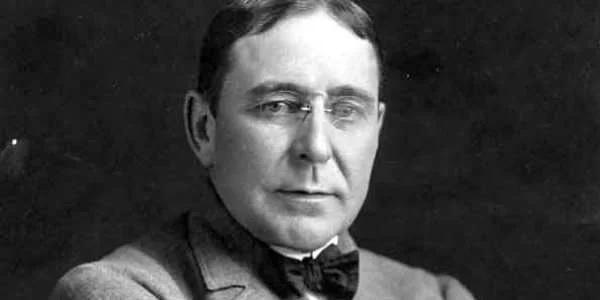
John Wilbur Chapman (/ˈtʃæpmən/ CHAP-mən; June 17, 1859 to December 25, 1918) was an American Presbyterian pastor, evangelist, and hymn writer.
He led some of the largest city-wide revival campaigns of his day and wrote the hymn One Day. His denomination also elected him moderator of its General Assembly.
Search for Wilbur Chapman and you get more than one man. A Kansas boy with a pig named Pete shows up, and so do Paul Wilbur and John Wimber. This guide sorts them out.
You will learn who J. Wilbur Chapman was, what he believed, and why churches still sing his hymns. You will also get plain answers to the piggy bank, Wimber, and Paul Wilbur questions people ask.
J. Wilbur Chapman at a Glance
| Personal | |
|---|---|
| Full name | John Wilbur Chapman |
| Born | June 17, 1859 Richmond, Indiana, USA |
| Died | December 25, 1918 (aged 59) New York City, USA |
| Nationality | American |
| Spouses | Irene E. Steddon (m. 1882, died 1886) Agnes Pruyn Strain (m. 1888, died 1907) Mabel Cornelia Moulton (m. 1910) |
| Children | Bertha Irene, Robert (died in infancy), John Wilbur Jr., Alexander Hamilton, Agnes Pruyn |
| Parents | Alexander H. Chapman (father) Lorinda McWhinney Chapman (mother) |
| Education | Lake Forest University (B.A., 1879) Lane Seminary, Cincinnati (1882) |
| Ministry | |
| Title | Pastor, evangelist, hymn writer |
| Denomination | Presbyterian |
| Ordained | April 13, 1881, Presbytery of Whitewater, Ohio |
| Best-known churches | Bethany Presbyterian (Philadelphia), Fourth Presbyterian (New York) |
| Top office | Moderator, Presbyterian General Assembly (1917 to 1918) |
| Career | |
| Known for | Simultaneous city-wide revivals, the Chapman-Alexander team, the hymn One Day |
| Protégé | Billy Sunday |
| Burial | Woodlawn Cemetery, Bronx, New York |
Early Life and Background
Birth and Family
Chapman was born in Richmond, Indiana, to Alexander H. and Lorinda McWhinney Chapman. He grew up in a Christian home and lost his mother at age 13.
As a boy he went to a Quaker First Day School in the morning. In the afternoon he went to a Methodist Sunday school.
Education and Conversion
At 17, a Sunday school teacher named Mrs. Binkley helped him stand during an invitation. He joined the local Presbyterian church in September 1876.
He studied at Oberlin College, then graduated from Lake Forest University in 1879. In 1878 he sat down with D.L. Moody in Chicago, and Moody used John 5:24 to settle his doubts about salvation.
Chapman finished at Lane Seminary in 1882 and later received honorary degrees from Wooster and Heidelberg.
Ministry and Career
Early Pastorates
Chapman was ordained in April 1881. His first work was a two-church field at Liberty, Indiana, and College Corner, Ohio.
In 1883 he moved to the Old Saratoga Dutch Reformed Church in Schuylerville, New York. In 1885 he took the First Reformed Church of Albany, where attendance grew from 150 to 1,500.
Bethany Presbyterian Church, Philadelphia
In January 1890 Chapman became pastor of Bethany Presbyterian Church in Philadelphia. It was the church of the merchant John Wanamaker and had one of the largest Sunday schools in the country.
A group of members began meeting each Sunday morning to pray for him. That prayer meeting grew to about 1,000 people.
He left in 1892 for full-time evangelism, then returned to Bethany from 1896 to 1899. By the end, Bethany was the largest Presbyterian church in North America, with 3,558 members.
Moody, Billy Sunday, and Winona Lake
Chapman was one of Moody’s key evangelists at the 1893 Chicago fair. In 1895 Moody called him the best evangelist in the country.
He also served as vice-president of the Chicago Bible Institute, now Moody Bible Institute. In 1893 he hired a former baseball player named Billy Sunday as his advance man for $40 a week.
Around 1895, Sol Dickey asked Chapman to help start a Bible conference in the Midwest. That became the Winona Lake Bible Conference in Indiana, and Chapman served as its first director.
Fourth Presbyterian and the Committee on Evangelism
In March 1899 Chapman became pastor of Fourth Presbyterian Church in New York City. About 650 people joined during his three years there.
In 1901 his denomination named him corresponding secretary of its Committee on Evangelism. He left the pulpit in December 1902 and soon supervised 51 evangelists in 470 cities.
Rise to Prominence
The Simultaneous Campaign Method
Chapman’s big idea was simple. Split a city into districts and run meetings in all of them at once.
His first full test came in Pittsburgh in 1904. He took 17 evangelists and divided the city into nine districts, and about 7,000 people professed faith.
The Chapman-Alexander Team
In 1907 the singer Charles M. Alexander joined Chapman. Chapman first wired R.A. Torrey, who had worked with Alexander, to make sure Torrey did not mind.
In 1908 they ran Philadelphia with 42 districts and 21 pairs of evangelists and song leaders. The campaign slogan was “The King’s Business,” and reports of about 8,000 converts are probably too high.
In early 1909 they took Boston, with 27 districts and meetings centered at Tremont Temple. Chicago in 1910 was their second most successful campaign.
Global Tours
From March to November 1909 the team toured Australia, the Philippines, China, Korea, and Japan. They returned to Australia in 1912 and 1913, adding New Zealand, Tasmania, and Ceylon.
In 1913 they ran an 11-week campaign in Glasgow, Scotland. Chapman often preached six times a day.
His last campaign with Alexander was in Elizabeth, New Jersey, in early 1918.
Hymns, Books, and Sermons
Chapman wrote the words to One Day, Jesus! What a Friend for Sinners (also called Our Great Saviour), and ‘Tis Jesus. Churches still sing the first two.
His sermon on Psalm 45:8, “Ivory Palaces,” helped pianist Henry Barraclough write the song Ivory Palaces. Want to see why sung truth sticks? Read how worship music strengthens your faith.
Selected Books
- Ivory Palaces of the King (1893)
- The Secret of a Happy Day (1899)
- The Surrendered Life (1899)
- Present Day Evangelism (1903)
- Fishing for Men (1904)
- Another Mile (1908)
- When Home Is Heaven (1917)
Personal Life
Chapman married Irene Steddon on May 10, 1882. She died in 1886, a month after their daughter Bertha Irene was born.
He married Agnes Pruyn Strain on November 4, 1888. They had four children, and Agnes died on June 25, 1907.
On August 30, 1910, he married Mabel Cornelia Moulton. His health was fragile for years, with at least 13 serious breakdowns after 1902.
What Religion Was Wilbur Chapman? Beliefs and Ministry Philosophy
J. Wilbur Chapman was Presbyterian. He was ordained by a Presbyterian presbytery and later led the denomination’s General Assembly.
He held firmly to the full truth of Scripture. In 1909 he demanded that missionaries who doubted it be called home.
Prayer shaped him too. In 1911 an American missionary known as “Praying Hyde” prayed over his Shrewsbury meetings in England, and Chapman said he learned what real prayer was.
Death and Burial: How Did J. Wilbur Chapman Die?
Chapman died on December 25, 1918, in New York City, a few days after a gallstone operation. It was his third such surgery in two years.
His last sermon was on December 15 at First Presbyterian Church in Jamaica, New York. The topic was “Christ, Our Only Hope.”
His funeral was held on December 29 at Fourth Presbyterian Church. He is buried at Woodlawn Cemetery in the Bronx.
Influence and Legacy
Chapman preached an estimated 50,000 sermons to about 60 million people through 1912. No evangelist before him had reached as many nations.
His method of many teams working one city at once shaped later citywide crusades. His protégé Billy Sunday built his first campaign in 1896 largely on Chapman’s sermons.
Winona Lake also kept growing. For years it was a major center of American evangelism.
Criticism and Limits
After 1909, Chapman’s method slowly lost ground. Campaigns in Bangor, Portland, Dayton, and Columbus in 1910 fell flat.
By 1912 he was mostly holding single mass meetings. Convert totals from his big campaigns were estimates, and some historians treat them with caution.
Interesting Facts About J. Wilbur Chapman
- He hired Alexander only after checking with Torrey first.
- Philadelphia’s 1908 campaign drew an estimated 1.47 million total attendance in six weeks.
- His Atlanta campaign had about 250,000 people across 200 meetings.
- A man called “Praying Hyde” changed how he prayed.
- He once ran a daily nursery at Bethany that cared for 1,867 children.
Timeline of J. Wilbur Chapman’s Life
- 1859: Born in Richmond, Indiana, on June 17.
- 1876: Joins the Presbyterian church.
- 1879: Graduates from Lake Forest University.
- 1881: Ordained on April 13.
- 1882: Finishes Lane Seminary and marries Irene Steddon.
- 1890: Becomes pastor of Bethany Presbyterian, Philadelphia.
- 1893: Preaches at the Chicago fair and hires Billy Sunday.
- 1899: Takes the pulpit at Fourth Presbyterian, New York.
- 1904: Runs the Pittsburgh simultaneous campaign.
- 1907: Charles Alexander joins his team.
- 1908: Leads the Philadelphia campaign.
- 1909: Leads Boston, then starts the first global tour.
- 1913: Preaches in Glasgow for 11 weeks.
- 1918: Retires as moderator in May and dies on December 25.
Wilbur Chapman Name Mix-Ups: Piggy Bank, Wimber, and Paul Wilbur
Three searches get tangled with this name. Each one points to a different person.
Wilbur Chapman and the Piggy Bank
The piggy bank story is about a different Wilbur Chapman. He was a ten-year-old boy in White Cloud, Kansas, not the evangelist.
In April 1913 he met William Danner of the American Mission to Lepers. Danner gave him three silver dollars, and Wilbur bought a piglet he named Pete.
In spring 1914 he sold the pig and sent $25 to the mission. That finished his mother’s $250 pledge for ten people with leprosy.
Danner wrote about it in the Sunday School Times. The mission then handed out “Pete the Pig” banks to Sunday schools, about 11,000 by 1919 and 100,000 by 1938.
A monument to the boy was dedicated in White Cloud in 1938. Piggy banks existed long before this, so his story helped make them popular rather than inventing them.
Some sites say author E.B. White named the pig Wilbur in Charlotte’s Web after this boy. No source found that backs that up. His parents were missionaries, and no source links the boy to the evangelist.
John Wimber
John Wimber (February 25, 1934 to November 17, 1997) founded the Vineyard movement. He died of a brain hemorrhage in Santa Ana, California, at age 63, after years of cancer, a stroke, and heart trouble.
Wimber pastored a church that started in 1977 as Calvary Chapel of Yorba Linda. He left Calvary Chapel in 1982 over how much weight to give spiritual gifts like healing, according to Vineyard USA.
Calvary Chapel founder Chuck Smith worried about excess in charismatic worship. Wimber’s church joined Kenn Gulliksen’s Vineyard group, which asked him to lead.
The Calvary Chapel network is still active today through pastors such as Brian Brodersen and Greg Laurie.
Paul Wilbur
Paul Wilbur (born January 18, 1951) is an American worship leader from Jacksonville, Florida. His religion is Messianic Judaism, which means he is a Jewish believer in Jesus.
He grew up with a Jewish father and a Baptist mother. He returned to his Jewish roots in college and later became known for Messianic worship albums.
He records with Integrity Music, the label tied to artists like Don Moen and drummer Carl Albrecht. Paul Wilbur has no known family link to J. Wilbur Chapman.
Frequently Asked Questions
Who was Wilbur Chapman?
J. Wilbur Chapman (1859 to 1918) was an American Presbyterian pastor and evangelist. He led citywide revivals with singer Charles Alexander and wrote the hymn One Day.
What was Wilbur Chapman’s religion?
He was Presbyterian. He was ordained in 1881 and became moderator of the Presbyterian General Assembly.
Does Chapman have a religious affiliation?
J. Wilbur Chapman was a Presbyterian minister. The Kansas piggy bank Wilbur came from a missionary family, but his own denomination is not reported.
What hymns did Wilbur Chapman write?
He wrote One Day, Jesus! What a Friend for Sinners, and ‘Tis Jesus.
Who was Billy Sunday’s mentor?
Chapman. He hired Sunday in 1893 as his advance man and gave him his start in Christian work.
What is the Wilbur Chapman piggy bank story?
A Kansas boy named Wilbur Chapman raised a pig named Pete and sold it for $25 to help people with leprosy. The story led to “Pete the Pig” coin banks for Sunday schools. This is a different Wilbur Chapman from the evangelist.
What happened to John Wimber?
Wimber died on November 17, 1997, of a brain hemorrhage after a fall. He had faced cancer, a stroke, and heart surgery. Todd Hunter had been named national coordinator of the Vineyard that July.
Why did John Wimber leave Calvary Chapel?
His church broke with Calvary Chapel in 1982 over the emphasis on spiritual gifts and healing. It then joined Kenn Gulliksen’s Vineyard churches, and Wimber became their leader.
What is Paul Wilbur’s religion?
Paul Wilbur is a Messianic Jew. He believes in Jesus and worships in a Jewish style.
What religion is Paul Wilbur?
Messianic Judaism. His father was Jewish and his mother was Baptist.
How did J. Wilbur Chapman die?
He died in New York City on December 25, 1918, a few days after a gallstone operation. He was 59.
Read Also
- David Wilkerson Biography: Teen Challenge, Nicky Cruz, Family & Death
- Archbishop Benson Idahosa Biography: Life, Miracles, Death & Legacy
- Jack Hayford Biography: Wife, Death, Books & Legacy
- Charles Stanley Biography: Age, Wife, Church, Net Worth & Last Words
- Jerry Vines Biography: Age, Wife, Books, Sermons & SBC Legacy

